Does your heart race before meeting friends for coffee, or do you spend hours replaying conversations in your head, wondering if you said something wrong? You need to know, you’re not alone in feeling this way. Meditation can be a gentle practice to ground yourself and find calm, but can meditation help social anxiety specifically?
Research shows meditation can gently ease social anxiety over time, helping thousands of people feel more comfortable in social situations without forcing them to change who they are.
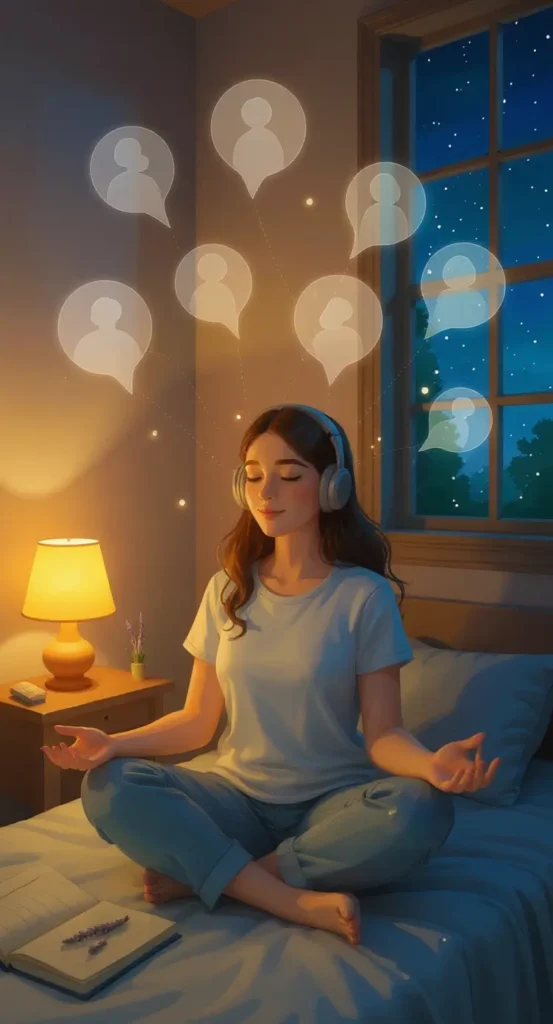
This article is meant to be a welcoming and low-pressure guide, especially if you’re shy or introverted. You’ll discover the science behind why meditation works for social anxiety, learn practical techniques that actually fit into your life, and understand what the process really looks like from start to finish.
We’ll look at how to let go of the fear of judgment and find meditations that work even when social situations feel overwhelming.
You don’t have to become extroverted. Just kinder and calmer with yourself around others.
What Social Anxiety Really Feels Like (And Why It’s Okay)
Your mind goes blank mid-conversation, even though you rehearsed what to say. The words just vanish when someone looks at you, waiting for a response.
Maybe you’ve skipped parties or gatherings because the thought of small talk makes your chest tight. Or you spend hours replaying a single interaction, convinced you said something embarrassing.
Social phobia isn’t just shyness. It’s your body believing there’s real danger in everyday situations like ordering coffee or speaking up in meetings. Your heart races.
Your palms sweat. You might feel nauseous or shaky around people you barely know.
Here’s what actually happens inside you:
- Fear of being judged or negatively evaluated by others
- Excessive self-consciousness that makes eye contact feel impossible
- Physical symptoms like trembling, rapid heartbeat, or sweating
- Mental exhaustion after even brief social interactions
- Constant worry about embarrassing yourself
After a simple conversation, you might feel completely drained. That’s because your nervous system has been working overtime, treating casual chat like a threat.
This isn’t a character flaw. You’re not broken or weird. Your brain is just trying to protect you, even when there’s nothing to protect you from.
Millions of people experience these same overwhelming feelings in social settings.
The encouraging part? Your nervous system can learn new patterns.
Meditation teaches it to dial down that alarm response, one breath at a time. You can train your mind to respond differently to social situations.
The Simple Science Behind Meditation And Social Anxiety
Meditation rewires the part of your brain that treats a coffee chat like a five-alarm fire, and the shift can begin in as little as five minutes a day.
How Meditation Lowers The “Danger” Signal In Your Brain
Your amygdala is like a smoke detector that decides whether something is threatening or safe. In social anxiety, that detector is constantly blaring even when you’re just ordering lunch or saying hello to a coworker.
When you’re meditating for anxiety, you’re teaching your brain to recognize the impulse to panic before it spirals.
Research shows that regular meditation reduces amygdala activity, meaning your brain literally reacts less intensely to social situations. It also lowers cortisol, the stress hormone that keeps your body in fight-or-flight mode.
Think of it this way: you’re not ignoring the alarm, you’re recalibrating it so it only goes off for actual emergencies.
Both mindfulness meditation (focusing on breath and present sensations) and transcendental meditation (using a mantra) can calm your nervous system, though mindfulness tends to be studied more for social anxiety specifically.
Why Even 5 Minutes Can Soften Social Phobia
You don’t need hour-long sessions to see results. Studies suggest that just eight weeks of brief daily practice can measurably shrink your amygdala’s reactivity to stress.
It’s like slowly turning down the volume on an oversensitive car alarm. In the first few days, you might not notice much. But over time, situations that used to flood you with dread, like walking into a room full of strangers, start to feel less overwhelming.
Even a quick five-minute session before a social event gives your nervous system a chance to reset.
Meditation for social anxiety isn’t about erasing fear instantly; it’s about building a buffer between the trigger and your reaction, one short practice at a time.
Letting Go Of The Fear Of Being Judged
The grip of judgment loosens when you practice sending warmth inward and catch anxious thoughts before they spiral. These approaches help reduce social anxiety by swapping harsh self-criticism for gentleness.
Loving-Kindness Meditation For Shy Hearts
Loving kindness meditation social anxiety relief starts with metta, an ancient practice of sending goodwill to yourself and others.
It works by softening the inner voice that anticipates rejection. When you repeat kind phrases toward yourself, your nervous system begins to relax.
Try this simple script when you’re alone and comfortable:
“May I be at ease in my own skin. May I be kind to myself when I stumble. May I feel safe as I am.”
Start with just five minutes daily. Place one hand on your heart as you speak these words silently or aloud. Notice any resistance that comes up without pushing it away.
The beauty of metta is that it doesn’t demand confidence you don’t have yet. It just asks you to treat yourself like someone worth caring for, even when social situations feel difficult.
Turning “What Do They Think Of Me?” Into Self-Compassion
That familiar question – What do they think of me? – can become a doorway instead of a trap. When you catch yourself asking it, pause and ask something different: What do I need right now?
This simple reframe shifts your attention from imagined judgments to actual feelings. Maybe you need to take three slow breaths. Maybe you need to remind yourself that one awkward moment doesn’t define you.
After practicing this for a week, most people notice a subtle shift. The racing thoughts don’t disappear completely, but they lose some of their power. You start remembering that your worth isn’t up for a vote in every conversation.
Best Meditations For Social Anxiety (Perfect For Beginners)
These beginner-friendly practices target the physical tension and worried thoughts that come with social anxiety. You can start with just a few minutes and use them right before social situations or as daily practice to build lasting confidence.
Breath Awareness To Feel Calm In Crowds
Box breathing gives you something concrete to focus on when social anxiety strikes. This 4-4-4 pattern works because it activates your parasympathetic nervous system, which tells your brain you’re safe.
Here’s the simple script:
- Breathe in slowly through your nose for 4 counts
- Hold your breath gently for 4 counts
- Exhale slowly through your mouth for 4 counts
- Hold empty for 4 counts
- Repeat for 2-3 minutes
You can do this in a bathroom stall before a meeting, at your desk, or even while sitting in your car. Nobody needs to know you’re doing it.
The counting gives your mind a break from worrying about what others think and redirects your attention to something you can control.
Body Scan To Release Tension Before Social Events
Social anxiety shows up in your body as tight shoulders, a clenched jaw, or a knotted stomach. A quick 5-minute body scan helps you spot and release this tension before you walk into a social setting.
The 5-minute version:
- Sit comfortably and close your eyes (1 minute)
- Notice your feet and toes, wiggling them gently to release any tightness (30 seconds)
- Move attention up to your legs and hips, letting them soften (30 seconds)
- Scan your stomach and chest, taking three deep breaths into any tight spots (1 minute)
- Check your shoulders, neck, and jaw—these hold the most social anxiety tension (1 minute)
- Finish with your face and head, relaxing your forehead and eyes (1 minute)
This meditation technique to help with social anxiety works best 10-15 minutes before you need to be social. You’ll walk in feeling more comfortable in your own skin.
Short Loving-Kindness Phrases You Can Do Anywhere
Loving-kindness meditation counters the harsh self-criticism that feeds social anxiety. This 30-second silent version is perfect when you’re already in a social setting and need a quick break.
Three phrases to repeat silently:
- May I be kind to myself
- May I accept myself as I am
- May I feel at ease
Say each phrase slowly, twice, while breathing normally. Try it while waiting in line, sitting in a group, or during a lull in conversation. The phrases shift your inner talk from judgment to compassion, which naturally eases the fear of being judged by others.
Also, you could try these handy affirmations:
Affirmations for Social Anxiety That Actually Calm You Down
50 Powerful Confidence Affirmations to Empower Self-Respect Now
Guided Meditation I Recommend To Help Social Anxiety
Declutter The Mind offers a straightforward guided meditation to help social anxiety without too much spiritual talk. Their 15-minute social anxiety meditation focuses on practical techniques you can use right away.
The Honest Guys on YouTube offer longer guided meditations (15-20 minutes) with calming background sounds. Their style feels conversational and easy for beginners.
Mindful Movement creates guided body scans and breathing exercises made for anxiety relief. Their sessions range from short 5-minute to longer 30-minute meditations, so they’re easy to fit into your day, however long you have.
These channels focus on mindfulness for social anxiety with simple instructions and realistic expectations. You don’t need special equipment or a fancy meditation space. Just headphones and a few minutes of privacy.
How To Start Meditating When Social Situations Feel Overwhelming
Starting meditation doesn’t require fancy cushions or perfect silence. You can begin right where you are, using moments you already have throughout your day. The key is building the practice when you’re calm, so it’s there for you when social situations feel challenging.
Tiny Daily Habits That Build Confidence In Conversations
Pick moments in your routine that already happen every day and add one minute of focused breathing.
Right after brushing your teeth, sit on the edge of your bed and take five slow breaths. While waiting for coffee to brew, close your eyes and notice the sounds around you.
These micro-sessions train your brain to pause and reset without needing special time carved out. The habit stacks onto something automatic, so you won’t forget or feel like you failed.
Simple starter moments:
- One minute after your alarm goes off (still in bed)
- While the shower water warms up
- During the last 60 seconds of your lunch break
- Right before starting your car to go home
Keep sessions under two minutes at first. You’re not trying to achieve anything except showing up consistently. That regularity matters more than duration when you’re building confidence.
Starting In Private (No Apps Or Classes Needed At First)
Your bedroom, bathroom, or parked car works perfectly for early practice. Choose wherever you already feel safe and won’t be interrupted. You don’t need downloads, subscriptions, or guidance tracks to begin.
Sit or lie down and simply notice your breathing. Feel your chest rise and fall. When thoughts about upcoming social events pop up, let them drift by like clouds without grabbing onto them.
Private practice removes the pressure of doing it “right” or worrying about how you look. You’re the only person who’ll ever know if your mind wandered or you adjusted your position.
This safe space lets you experiment and mess up freely.
A 3-Minute Routine To Feel Peaceful At Parties
Before leaving home for any social event, take three minutes in a quiet room for this sequence:
Minute 1: Sit comfortably and take three deep breaths, counting to four on each inhale and six on each exhale.
Minute 2: Scan your body from head to toes, noticing where tension sits (jaw, shoulders, stomach). Breathe into those tight spots.
Minute 3: Picture yourself at the event feeling present rather than perfect. See yourself listening to one person without planning what to say next.
This brief reset calms your nervous system before you walk through the door. Your body learns that social situations don’t have to trigger immediate panic.
Find out more about creating positive habits here:
Positive Habits for Social Anxiety (That Won’t Stress You Out)
What To Expect On The Journey
Using meditation to help reduce social anxiety isn’t always easy from the start. Some people feel relief right away, but others hit a few bumps before things improve.
Can Meditation Make Anxiety Worse At First? (The Honest Truth)
Yes, meditation can temporarily increase anxiety for some people during the first one to two weeks. This happens because you’re finally sitting still with thoughts and feelings you’ve been avoiding or running from.
When you begin paying attention to your inner world, suppressed emotions can bubble up. You might notice racing thoughts more intensely or feel restless during practice. This is actually your nervous system starting to process stored tension, not a sign that meditation isn’t working.
Common early experiences include:
- Increased awareness of physical tension you didn’t notice before
- Thoughts seeming louder or more intrusive
- Feeling fidgety or wanting to quit mid-session
- Temporary spikes in worry after practice
This phase is often called emotional detox. Your brain is learning a new skill, and that adjustment period feels uncomfortable.
If this happens to you, try shorter sessions of just 3-5 minutes and remind yourself that this discomfort is temporary. Most people who push through gently find that these symptoms fade within two weeks.
Realistic Timeline – When Most People Start Feeling Calmer
Week 1-2: You’re building the habit. Anxiety might feel the same or slightly worse as you adjust. Focus on just showing up, not on immediate results.
Week 3-4: Small shifts appear. You might catch yourself pausing before reacting in social moments, or notice your breath stays steadier during mild stress.
Week 5-8: Daily meditation anxiety relief becomes more noticeable. Many people report feeling less dread before social events and recovering faster after awkward interactions.
Month 3+: Benefits deepen and stabilize. Your baseline anxiety often lowers, and you handle social situations with more ease. The changes feel natural rather than forced.
How long does it take for meditation to help social anxiety? Most people notice meaningful improvements between 4-8 weeks with consistent practice. However, even small doses add up faster than you’d think.
Gentle Ways To Stay Consistent On Tough Days
How often should I meditate for social anxiety? Start with 5-10 minutes daily rather than aiming for perfect 30-minute sessions you’ll skip.
On rough days, give yourself permission to do less. Two minutes of breathing counts. Sitting quietly for 60 seconds while your coffee brews counts. You’re still training your brain even in tiny doses.
Ways to stay on track without pressure:
- Set your meditation timer for just 3 minutes when you’re struggling
- Use the same time and place daily to build automatic habits
- Track practice with simple checkmarks, not performance ratings
- Pair meditation with an existing habit like morning coffee
Talk to yourself like you’d encourage a good friend. “I showed up today even though it was hard” matters more than “I did it perfectly.”
Celebrate the days you practice for one minute instead of beating yourself up for not doing twenty.
Some days you’ll forget or genuinely need to skip. That’s normal life, not failure. Just start fresh tomorrow without drama or guilt.
Final Gentle Thoughts On Finding Your Social Ease
Meditation will help, but won’t cure social anxiety completely, and that’s okay. It’s not about erasing who you are or becoming someone else entirely. Instead, it gives you a way to carry your nervousness with more kindness and less internal criticism.
Think of your practice as building a toolkit. Some days you’ll need a quick breathing exercise before a meeting. Other days, you might sit with a longer loving-kindness meditation to soften the harsh voice in your head. Both matter equally.
The shyness might not disappear. The butterflies before social events might still show up. But you’ll learn to sit with them differently, without letting them control your choices or keep you from meaningful connections.
Progress isn’t linear. Some weeks, you’ll feel more confident in groups. Other times you’ll retreat a bit, and that’s perfectly human. Your practice is there for all of it.
You deserve to feel safe in your own skin, no matter how many people are in the room.
Bookmark a 5-minute meditation you liked from this guide. Save these techniques somewhere you can find them easily.
Come back whenever you need a gentle reminder that you’re doing better than you think.
Social Anxiety Related Articles
Here’s a list of some of our other helpful articles on the subject of Social Anxiety: